China · 2021
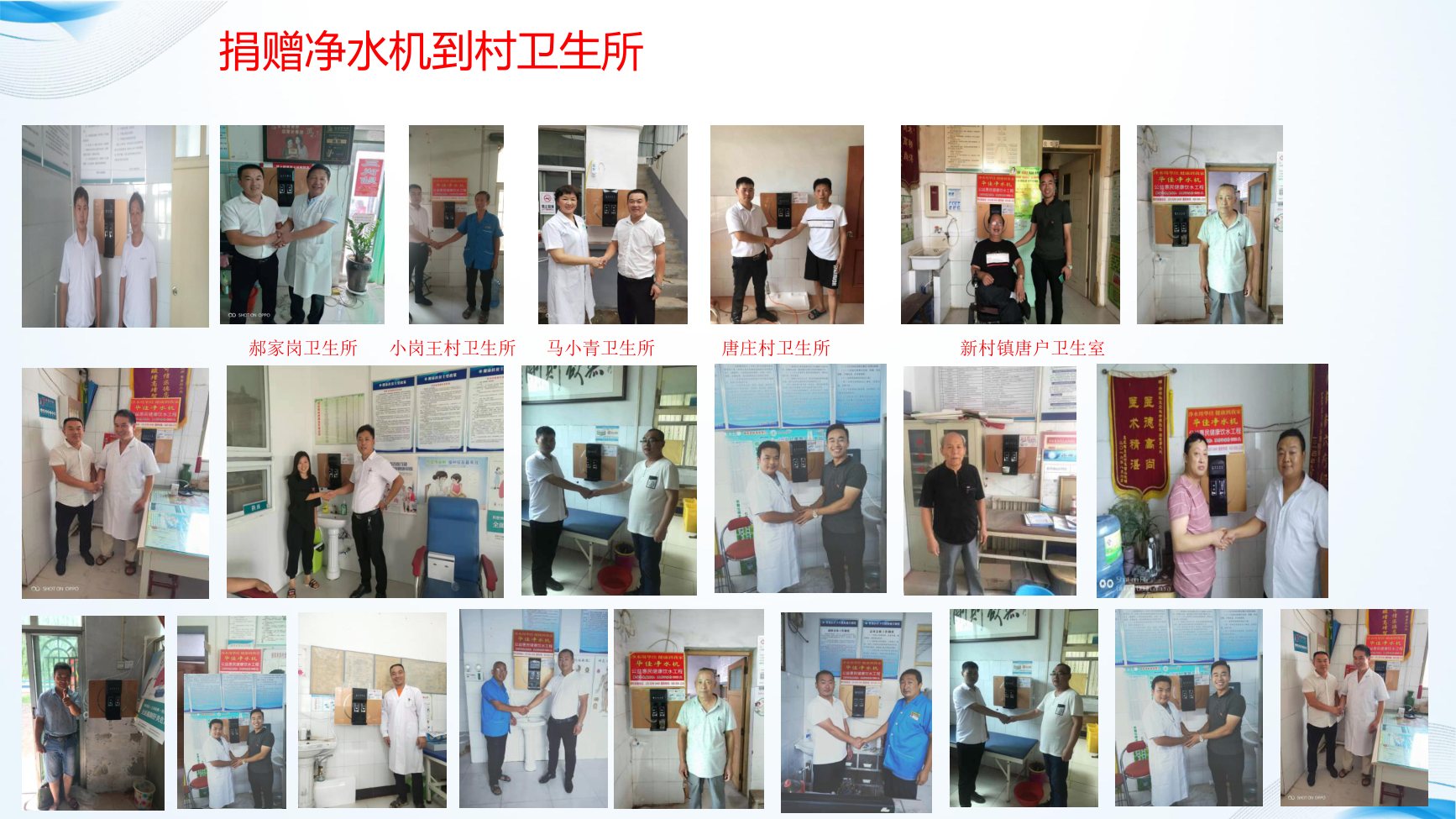
Safe water at five village clinics
Under-sink reverse osmosis units installed in village clinics, with a filter-change card and a year of cartridges left with each clinic.
What the site needed
The clinics had mains water but no reliable way to make it safe for patients, and no budget line for a purifier. A donated unit without cartridges would have been a photograph, not a water supply.
How it was run
- A five-stage under-sink unit, chosen because the clinics already had a sink and a pressured supply.
- Installation by a technician who also trained one staff member on flush and cartridge change.
- A year of cartridges left on site, labelled by change month.
- A laminated card with the service interval and a contact for replacement parts.
What it proves
The smallest ticket in the portfolio produces the clearest proof. Five units, five named clinics, five photographs, one consumable plan. For a distributor, the lesson is that the consumable is the business: the unit is sold once, the cartridges are sold every six to twelve months.
The site, frame by frame
Unit and consumable economics
| Unit cost, installed | USD 300-450 |
| Cartridge set, annual | USD 45-70 |
| Service visit | One per year |
| Clinic benefit | Safe water without boiling |
| Distributor annuity | Cartridges plus one service call |
| Break-even | Second cartridge year |
Illustrative. The installation is the entry ticket; the filter set is the recurring revenue.
What to copy, what to avoid
- Never donate a unit without its first cartridge set.
- Label cartridges by change month; clinics forget dates.
- Train one named person, not the whole staff.
- Price the service visit into the original quotation.
Send the site. We will send the file.
Road width, water source, destination and the document your funder or customs office expects. You will get a configuration, a price and the evidence list in one reply.